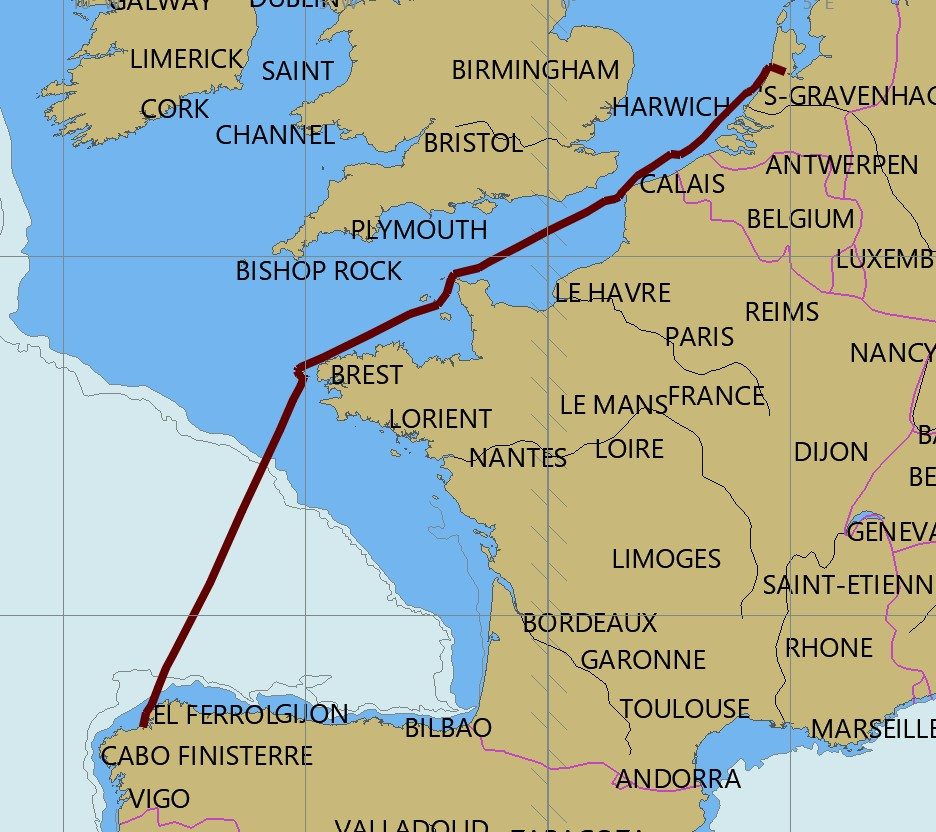
Total Distance : 828.51 nautical miles
Average Speed : 7.04 knots
Time Enroute : 117.38 hours
After a few pleasant days in A Coruña, Mikel returned to Luxembourg on June 24, while the rest of us set off that same morning on the longer passage to Amsterdam. Anna had been cruising smoothly, but we carried out a thorough check of the engine room, onboard systems, and route planning to ensure the journey ahead would remain just as trouble-free.
With three of us on board, we settled into a steady watch routine of 4 hours on, 8 hours off. This rotation gave each crew member proper rest while ensuring someone was always on deck for navigation, lookout, and engine checks. This rotation system worked smoothly with manageable night watches, ample downtime, and a good balance of responsibility shared among us.
The first leg to mid-Biscay brought warm, hazy weather with light S–SE breezes. By nightfall the sea was calm, with only a gentle long W/NW swell (1–2 m). Currents were negligible and tides had little effect offshore. We had been warned about treacherous seas in the bay but for us it was all smooth sailing.
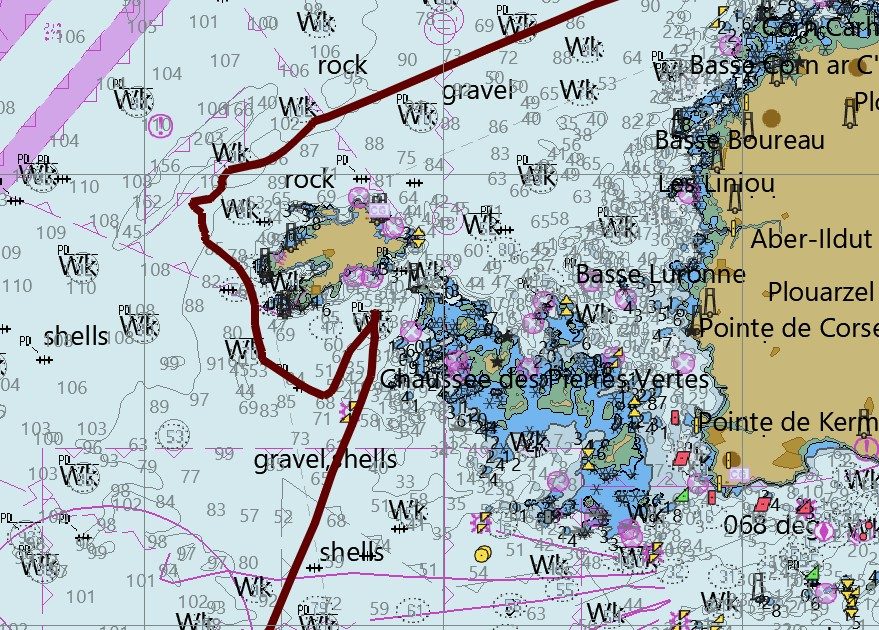
Approaching Brittany, some thunderstorms developed with squalls shifting winds from S to W/NW at 30–40 kt. Offshore seas were moderate (1–2 m), but under squalls they built into short, steep 2–3 m chop. Hitting the Raz de Sein/Chenal de la Helle without planning meant that we found ourselves on a south flowing tide with wind-against-tide, creating rough to very rough overfalls, strong streams, and heavy slamming. We were battling a 5 knot current which can increase to 9 knots during spring tides. Once Anna slowed to 2 knots and the wind turned the tide into a washing machine and with another 2 NM to go through the cut we decided to turn around and go around the Ile d’Ouessant. Even that was challenging and we had to navigate a fair way out to escape the tidal stream as you can see from our track.
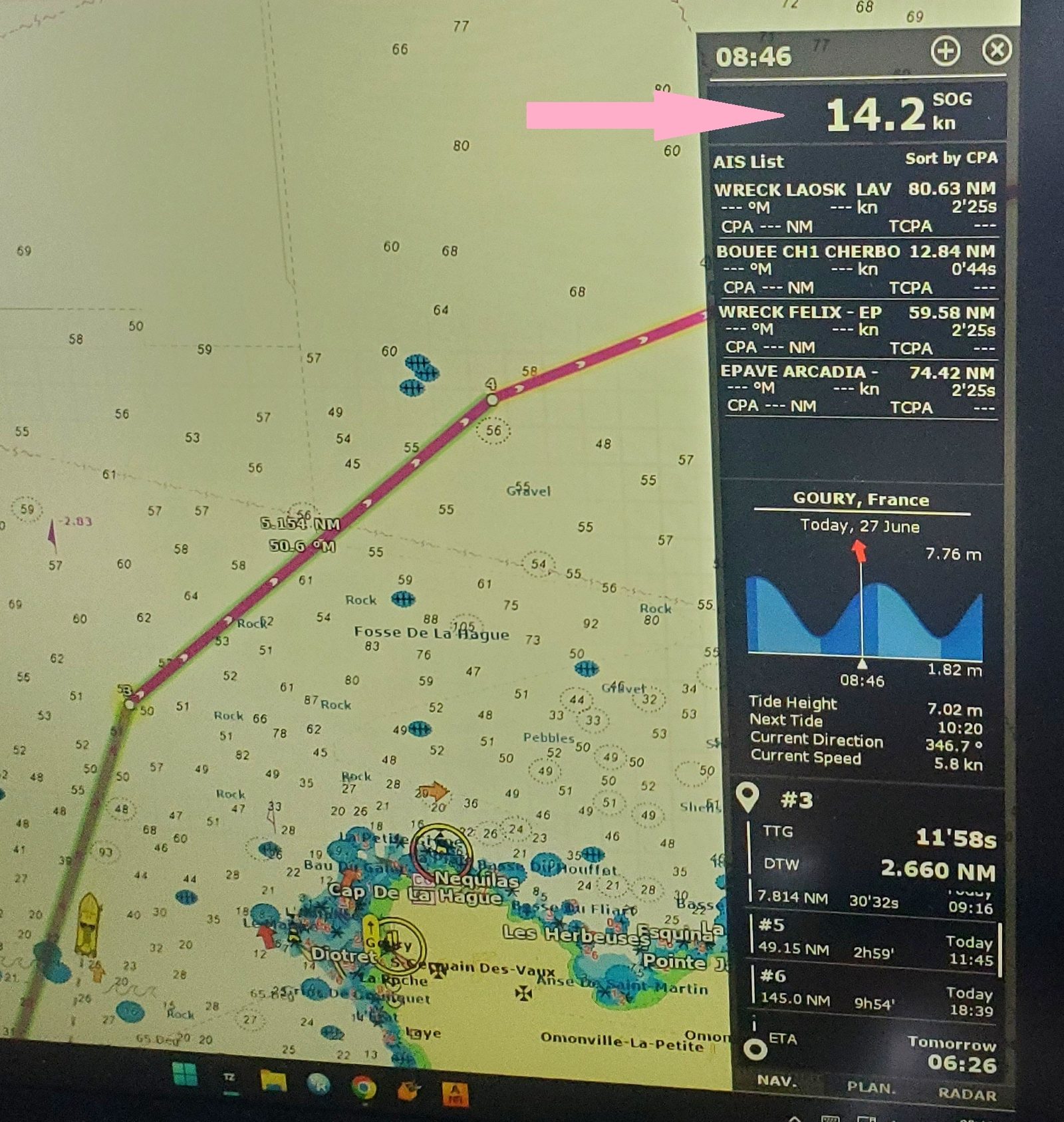
On the morning of June 26, we were cruising a little exhausted in the direction of Western Channel. A squall system passed through, bringing gust fronts, heavy rain, and poor visibility. Winds shifted S → W/NW, with gusts and showers. Seas were moderate to rough (2–3 m), becoming very steep in tidal races near Ushant, Alderney, and inshore passages. But this time we had our timing spot on and were using the tidal stream fully to our advantage. Anna was racing through the cut at 14.2 knots, twice our usual speed. Even with the engine at close to idle we managed a respectable 10 knots.
For the next leg where we were entering the Dover Channel, the weather cleared, with moderate W/SW winds and some scattered showers. Seas were moderate (1–2 m), and we managed the Dover Strait with perfect timing again catching the last of the north flowing tidal stream. As expected, a lot of traffic and plenty of traffic had all three of us on watch keeping a keen eye on the AIS movements on our chart.
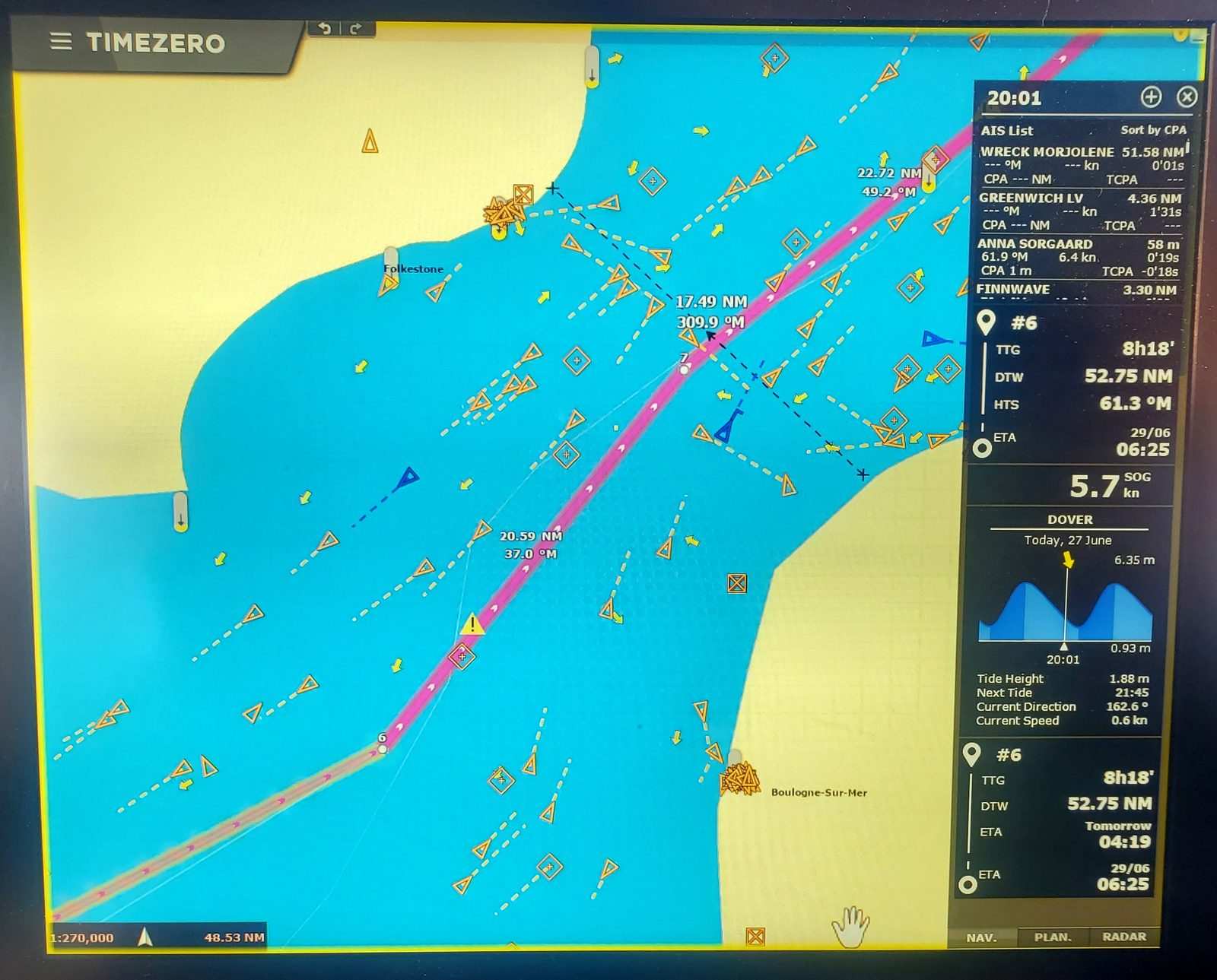
After crossing the southern North Sea overnight, conditions were settled with a light W/SW breeze, slight seas, and good visibility. Approaching the Dutch coast in the early morning, the tidal stream was still noticeable at 1-2 kt, but far milder than at Brittany or Dover.
It was a rare encounter when we crossed paths with Anna’s sister ship Luna, another 49-foot Seline. Bound for the Baltic as well, she shared our course, and we hoped to sail together again for part of the journey.
After passing Antwerp and Rotterdam we finally could make out the harbour entry lights of Amsterdam at around 1 am on the 29th of June. The whole crew had been up for 24 hours or longer but we were all excited to complete this passage.
Except – there was one more hurdle to take. As we entered the green and red lateral markers a friendly Dutch voice came on the radio and directed us to the “southern lock”. Lock, what lock? Oh yes, we have to enter Amsterdam Harbour through a lock and it was right in front of us. A bit of a panic broke out, fenders were attached, mooring lines readied in the fastest time ever and we looked on in excitement as the large doors opened in front of us. It was the first lock ever for the crew and we did not quite know what to expect. It turned out to be a lot simpler than we feared, Anna was lifted up without much movement and the mooring lines were not even really required. With no one else in the lock it was easy and quick in and out in less than 15 minutes.
Inside the Noordzeekanaal, waters were calm and the remaining 10 NM were an easy run, with industrial sites, shipyards, and terminals along the banks. A few commercial ships came the other way but we enjoyed this part of the passage after the rough seas from the last few days. We were all on deck in anticipation of our imminent arrival. The canal widened near the city, passing commercial docks and container terminals before we fixed the lines at Amsterdam Marina (📍52°24′31″ N, 4°53′40″ E), a glorious end to our longest passage so far at around 4am in the morning on June 29.
Overview of IJmuiden Seaport Locks
- Length: ~15 nautical miles (25 km) from IJmuiden to Amsterdam.
- Width: Typically 200–250 m, with ample room for commercial traffic and leisure craft.
- Depth: Maintained at ~15–17 m for deep-sea vessels, so yachts have no depth worries.
- Traffic: Busy with seagoing ships, tugs, barges, and ferries. Keep a good lookout and monitor VHF for shipping movements.
All three of us had visited Amsterdam before, each in different times and circumstances, yet arriving together by sea gave the city a fresh sense of discovery. As we entered Amsterdam Marina in the stillness of early morning, the city revealed itself with quiet elegance. From the water, the contrast was striking — the industrial docks and shipyards lining the Noordzeekanaal gradually giving way to the timeless charm of Amsterdam’s historic heart.
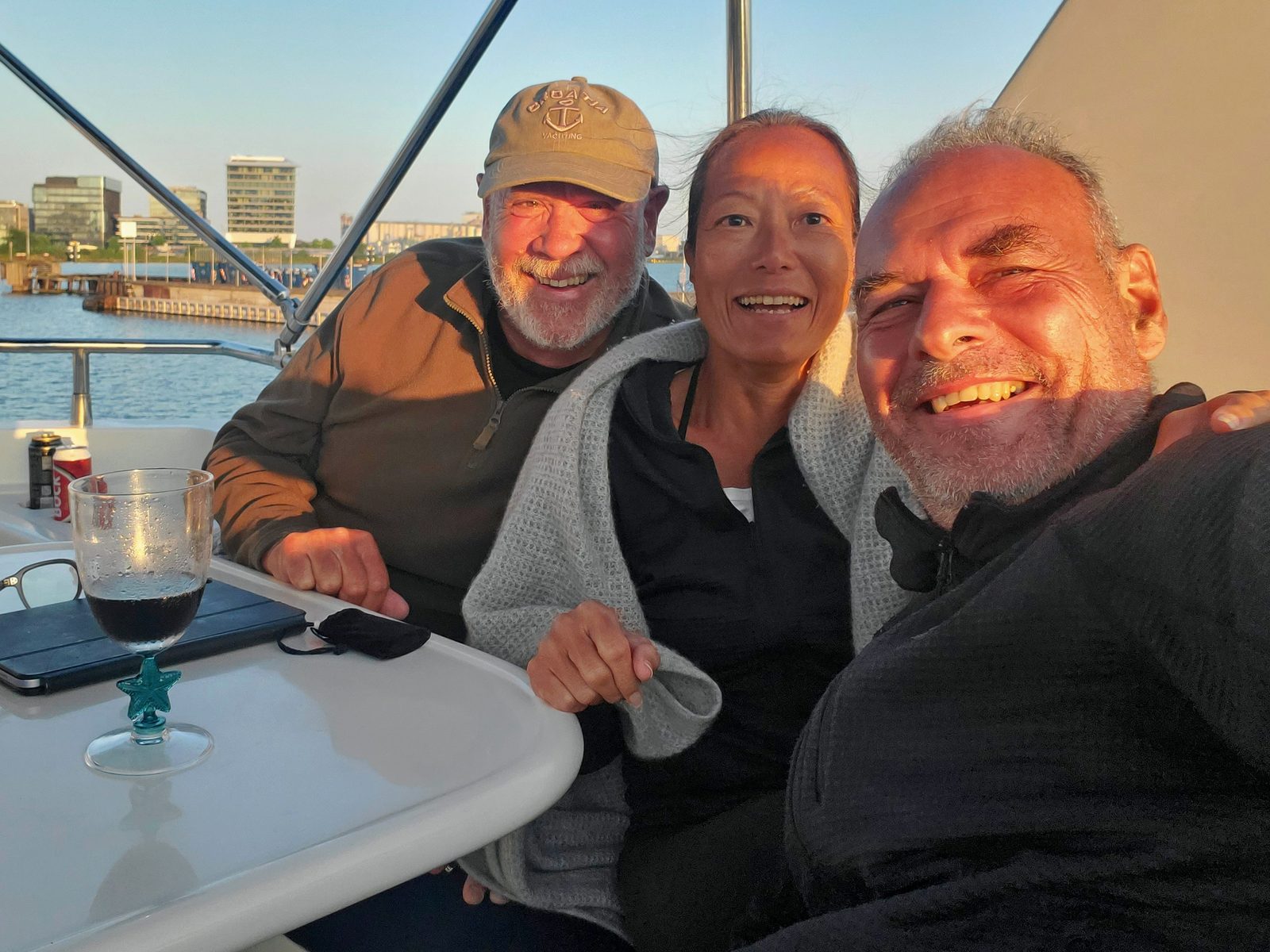
True to tradition, Martin and David wasted no time in reviving their long-delayed toast, raising cold beers to celebrate our safe arrival.
Since we were all leaving the boat for a few weeks’ break, plans were set in motion: Martin and Ivy would travel to Germany to celebrate Mum’s birthday, while David, returning first to Luxembourg before heading to Scotland for a wedding, would take the boat from Amsterdam Marina up the canal to Heeg Hafen, where it would remain docked for three weeks.
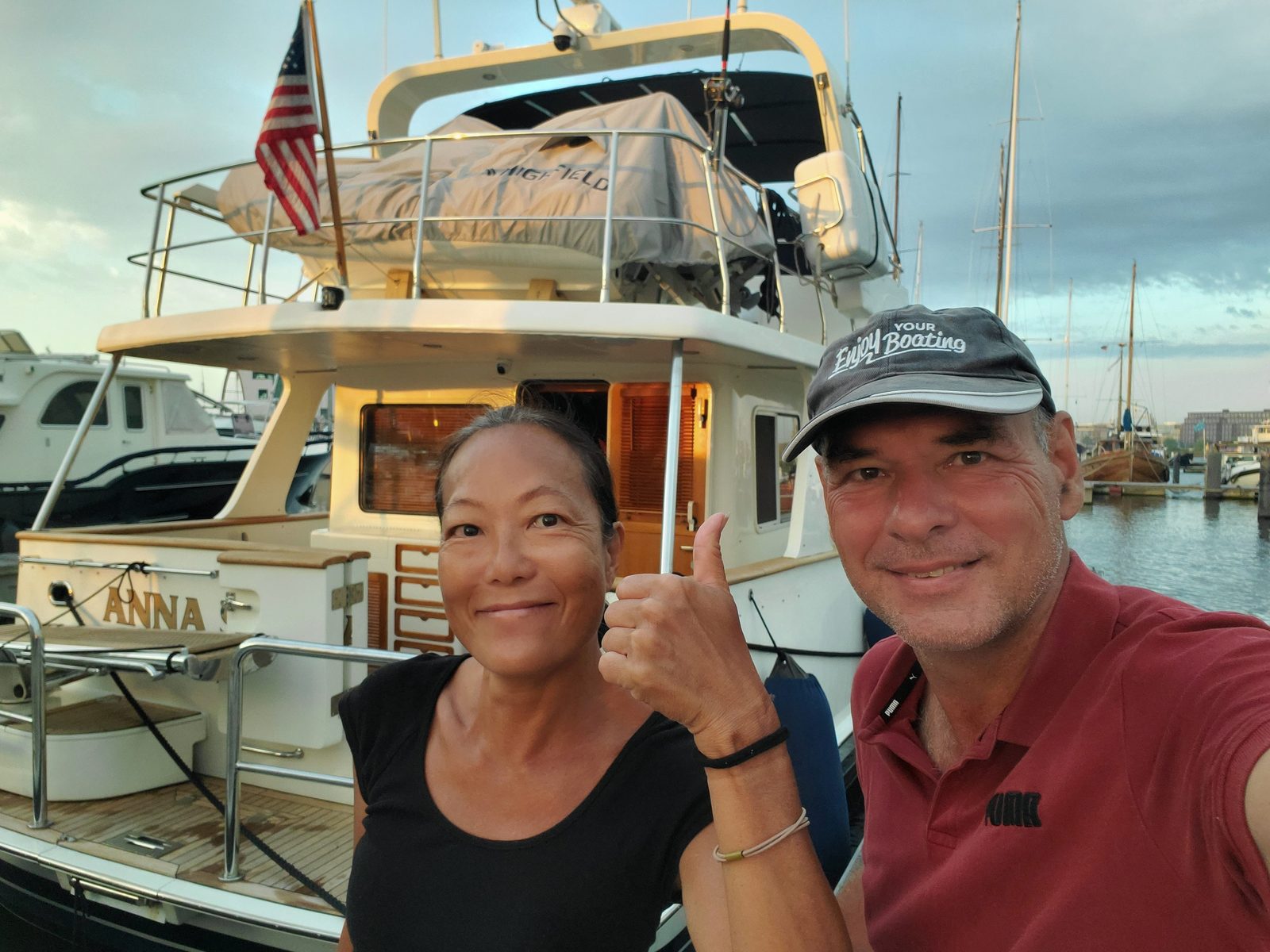
we will miss you Anna … bis bald !
In the meantime, after the long days at sea, our stop at Amsterdam Marina was the perfect chance to tidy and freshen up Anna. At the same time, we could not miss the opportunity to soak up some of the history, culture, and vitality of this vibrant city.
A short ferry ride into the centre brought us straight into Amsterdam’s signature charm. Amsterdam is a vibrant city where history, culture, and modern life intertwine. Its UNESCO-listed canals, tree-lined streets, and 17th-century gabled houses reflect its Golden Age heritage, while world-class museums like the Rijksmuseum, Van Gogh Museum, and Anne Frank House showcase art and history. Visitors can wander charming neighbourhoods such as Jordaan, De Negen Straatjes (Nine Streets), and the lively De Pijp, explore historic streets and alleys, or stroll along iconic bridges spanning the canals.
The city’s coffeeshops offer a uniquely Amsterdam experience — relaxed venues where visitors can legally enjoy cannabis in a social setting, often combined with cafés and light refreshments, providing insight into the city’s liberal culture. Bustling markets such as Albert Cuyp Market and the floating Bloemenmarkt give a taste of local life. For dining and nightlife, there are countless canal-side cafés, cozy brown cafés, modern bistros, and fine dining restaurants serving Dutch specialties, European cuisine, and international flavours. Popular sights include Dam Square, Begijnhof, the Royal Palace, Westerkerk, and the Anne Frank House, while scenic walks or boat tours along the Herengracht, Prinsengracht, and Keizersgracht reveal Amsterdam’s iconic waterways.
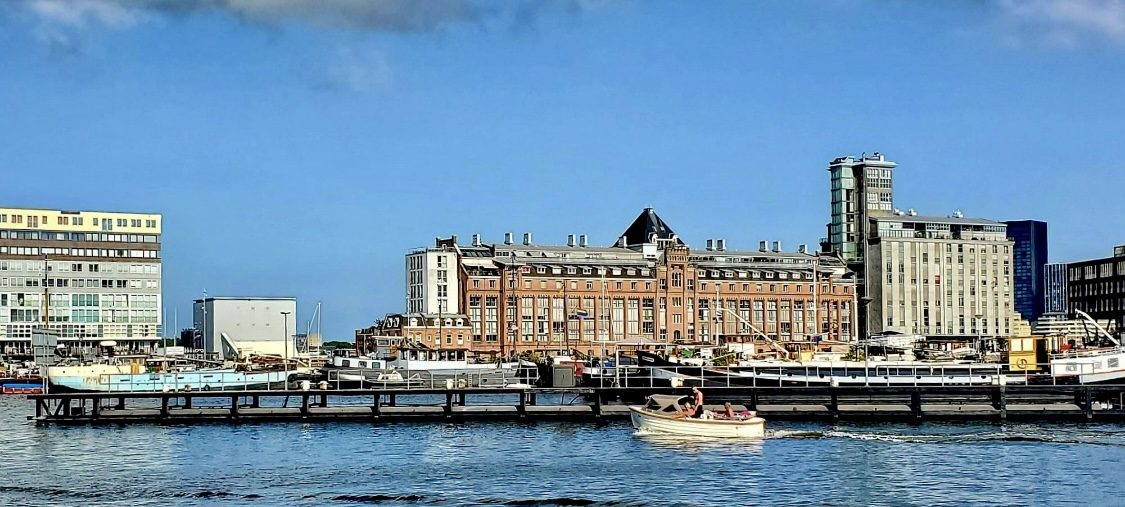
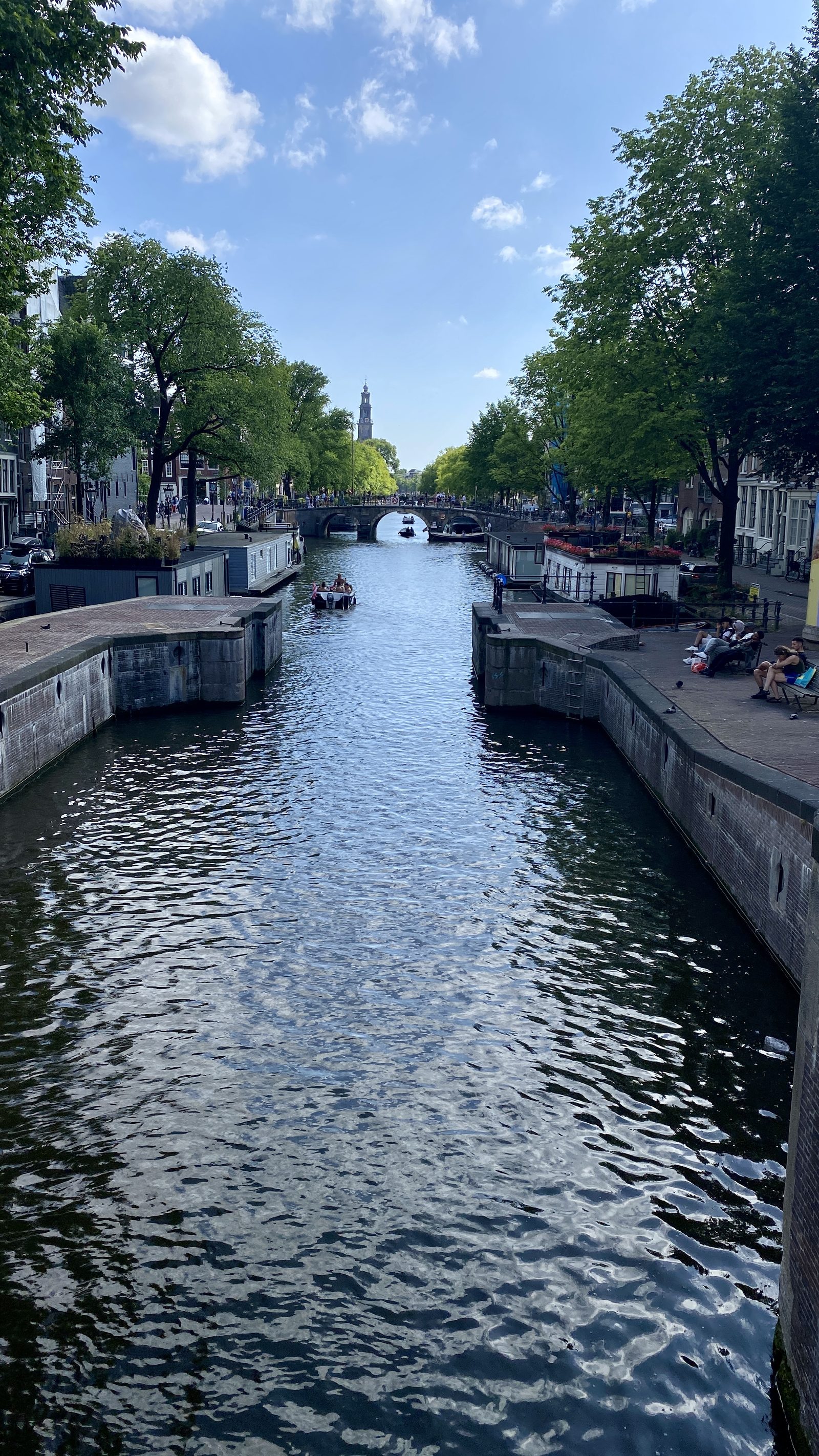
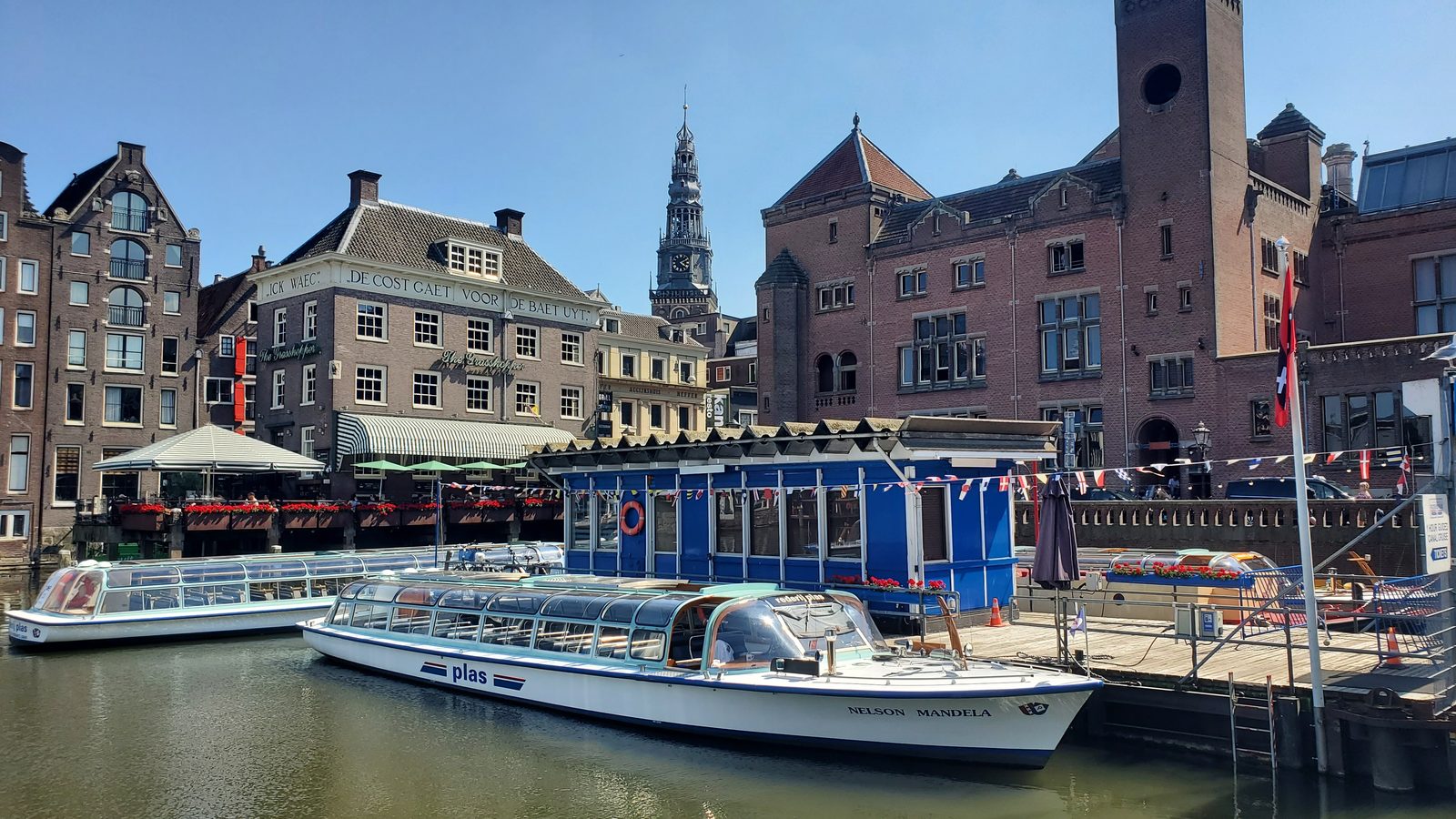
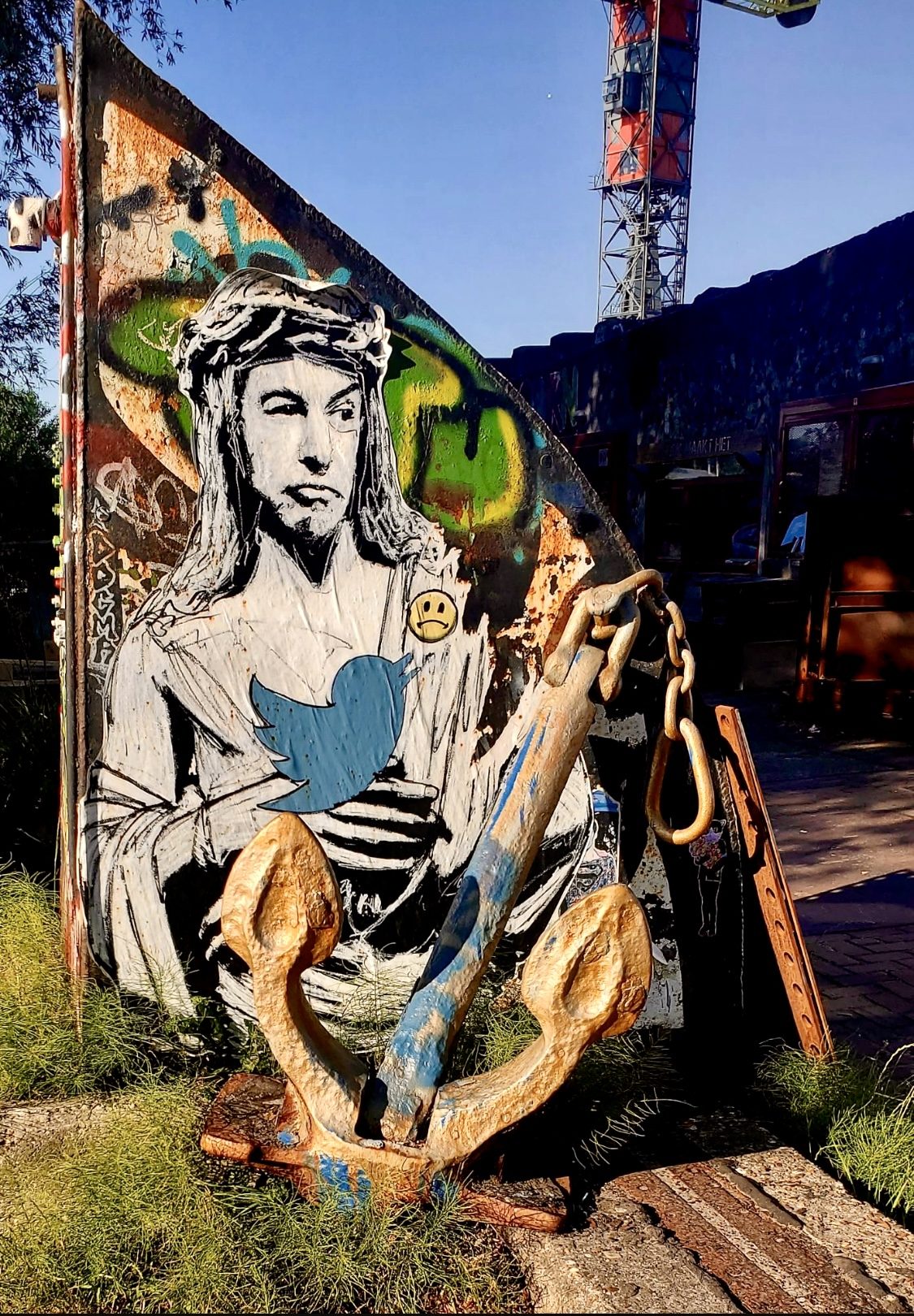

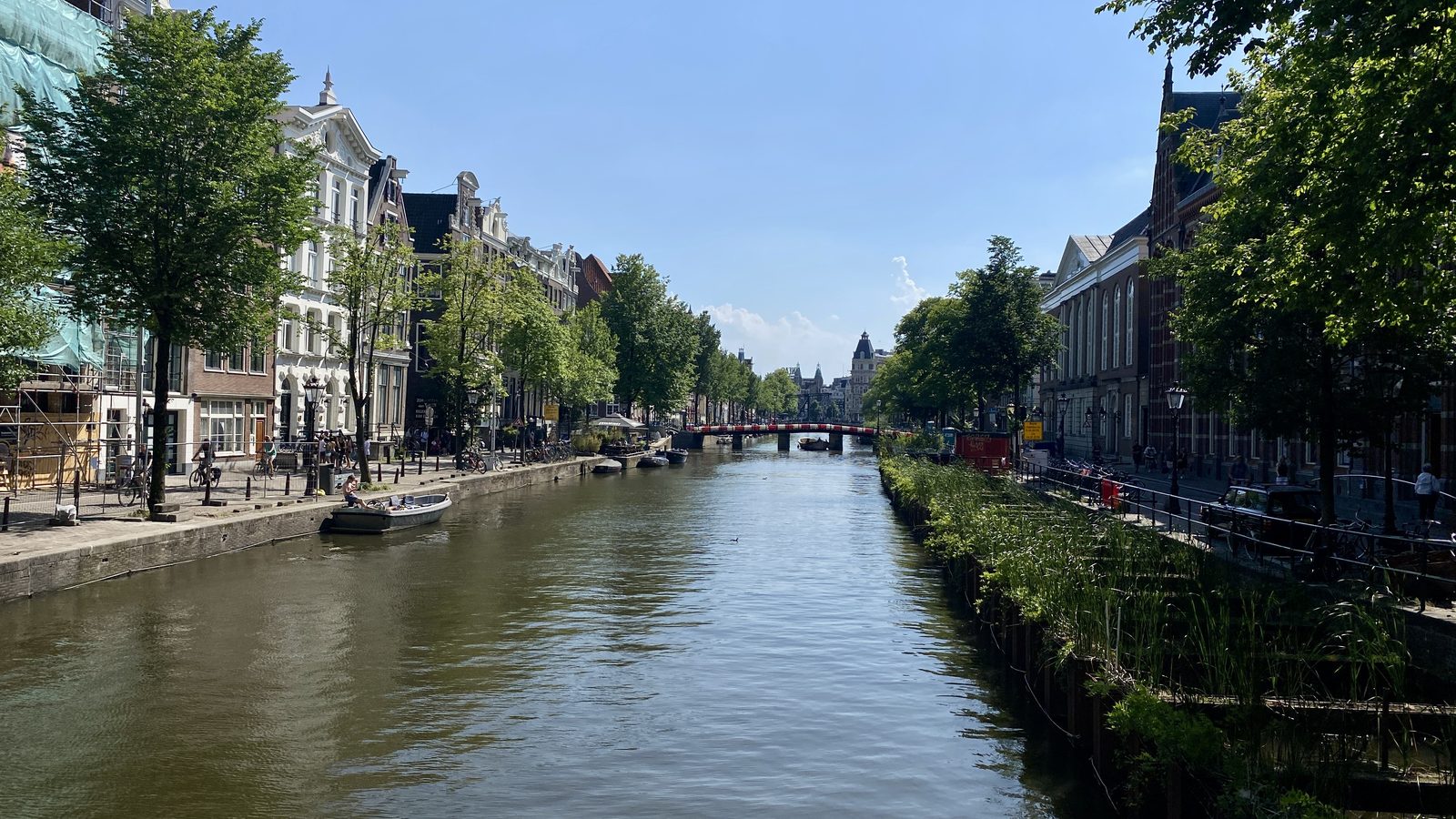
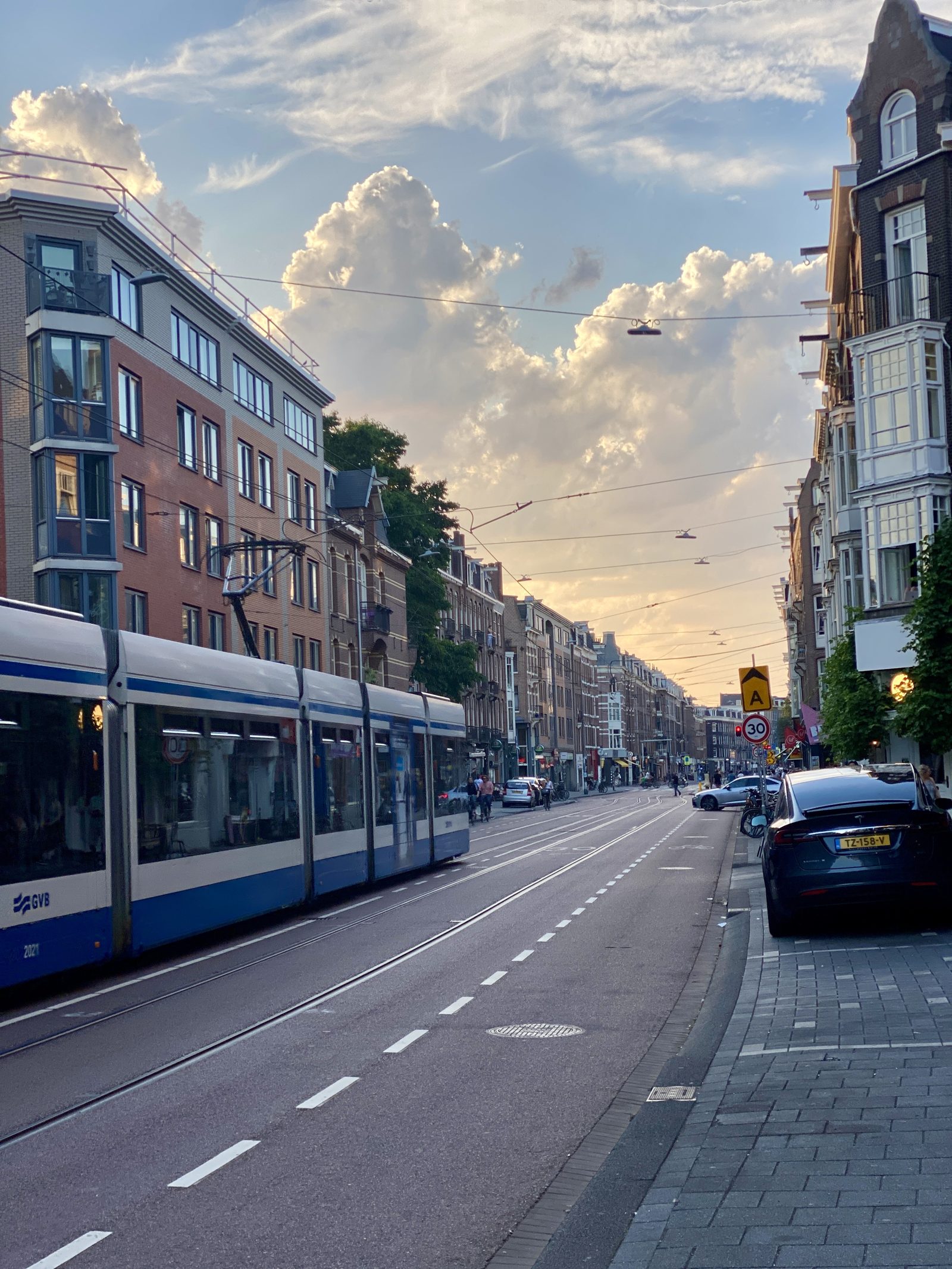
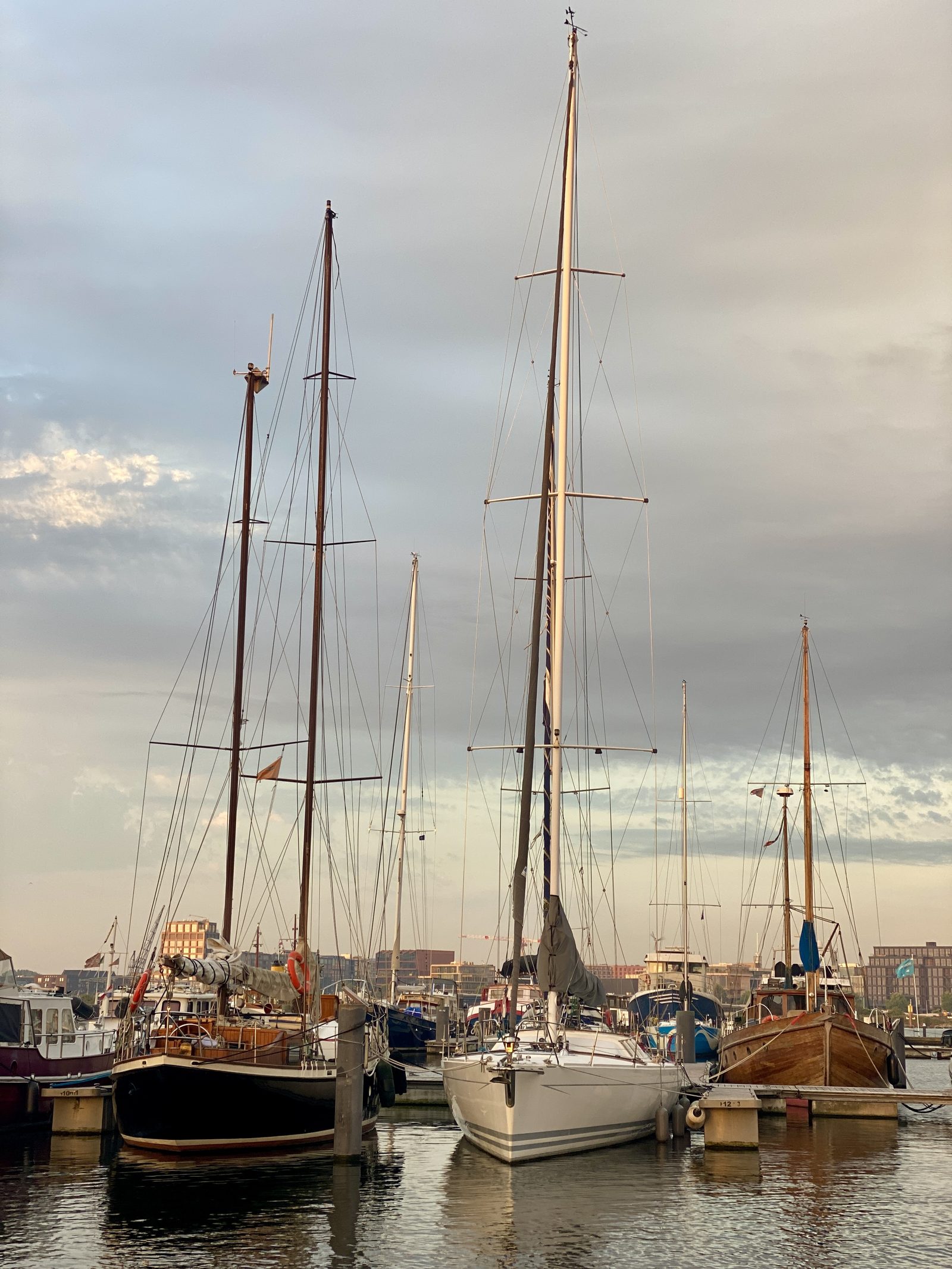
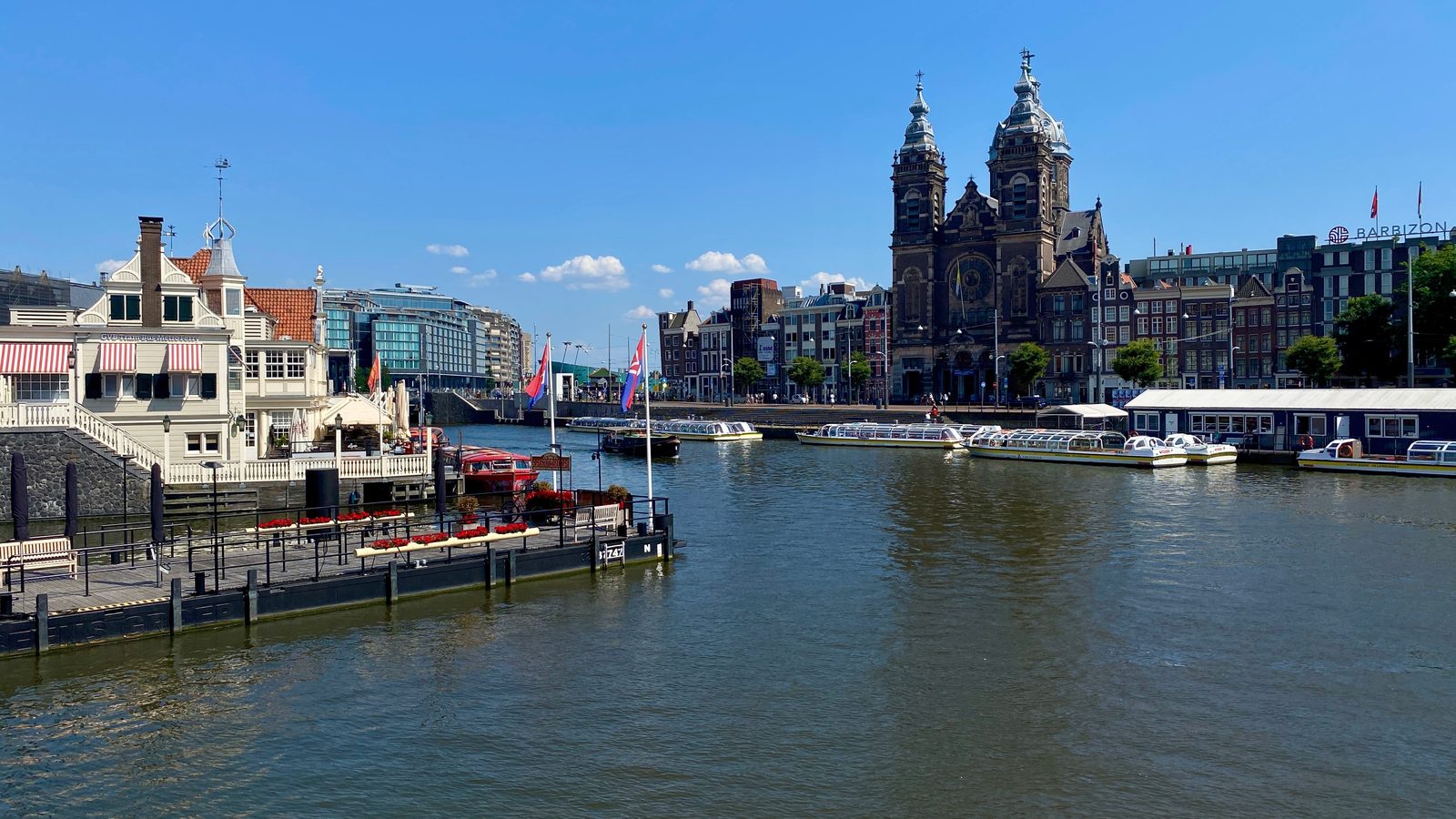
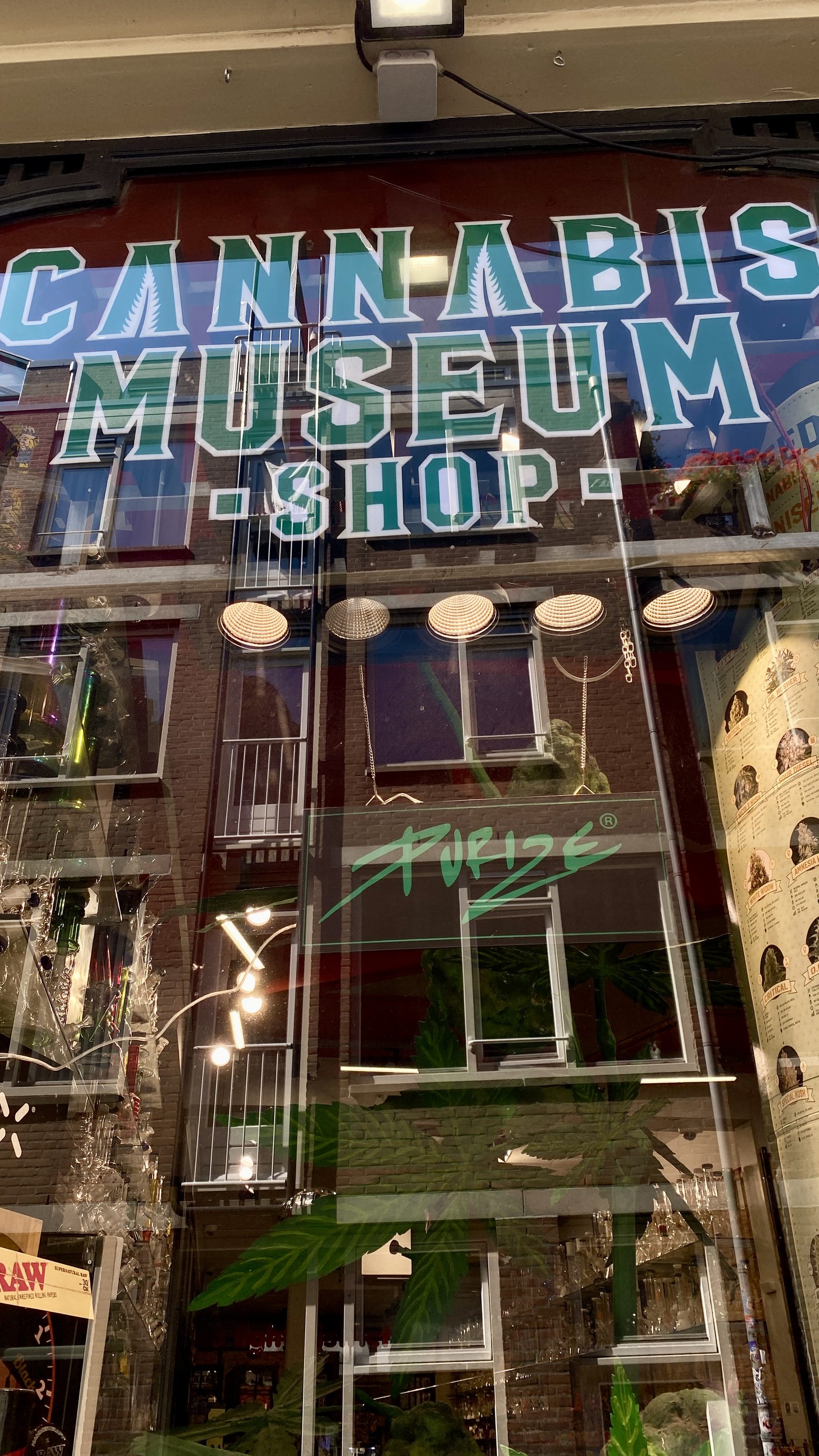
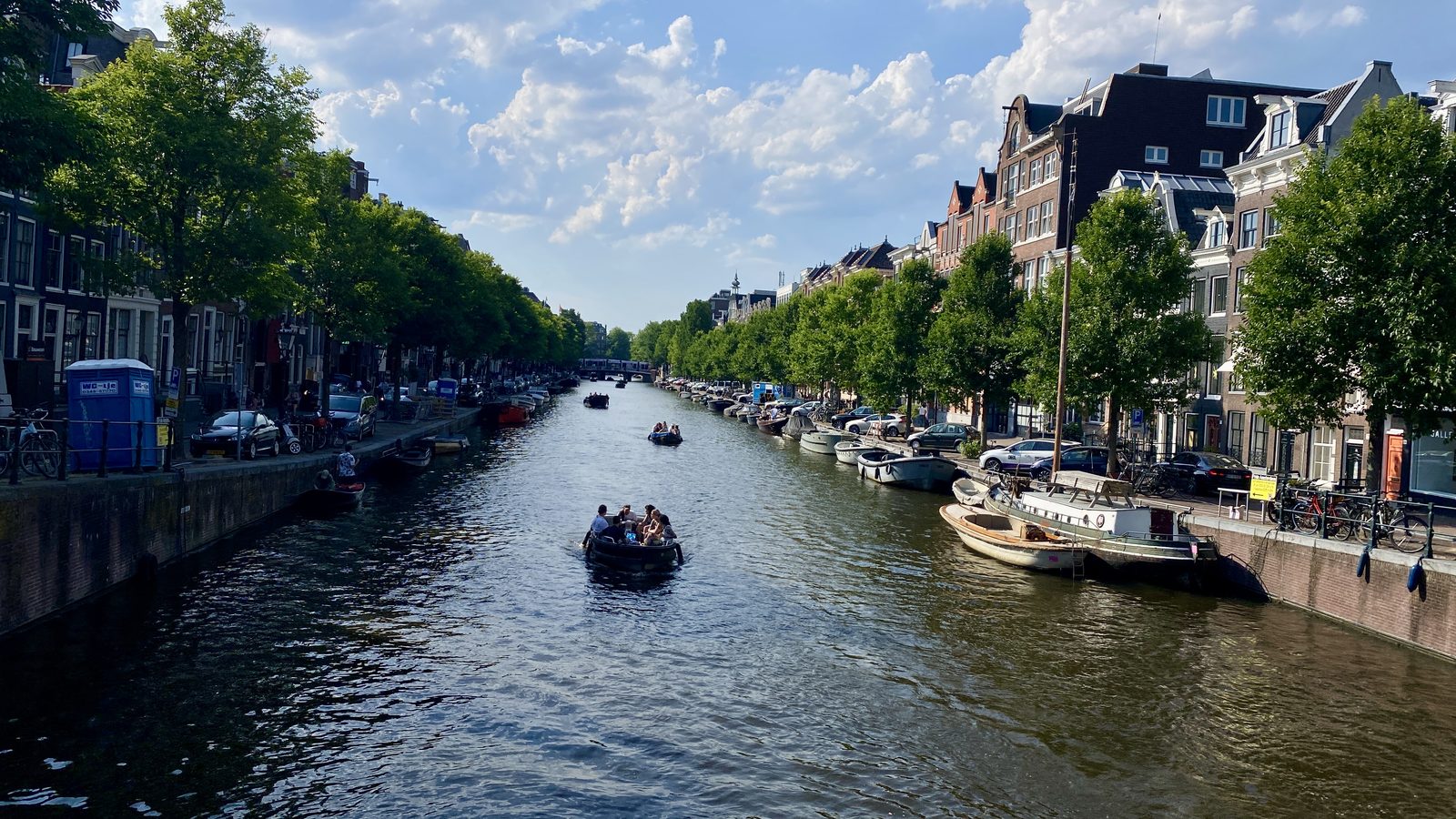
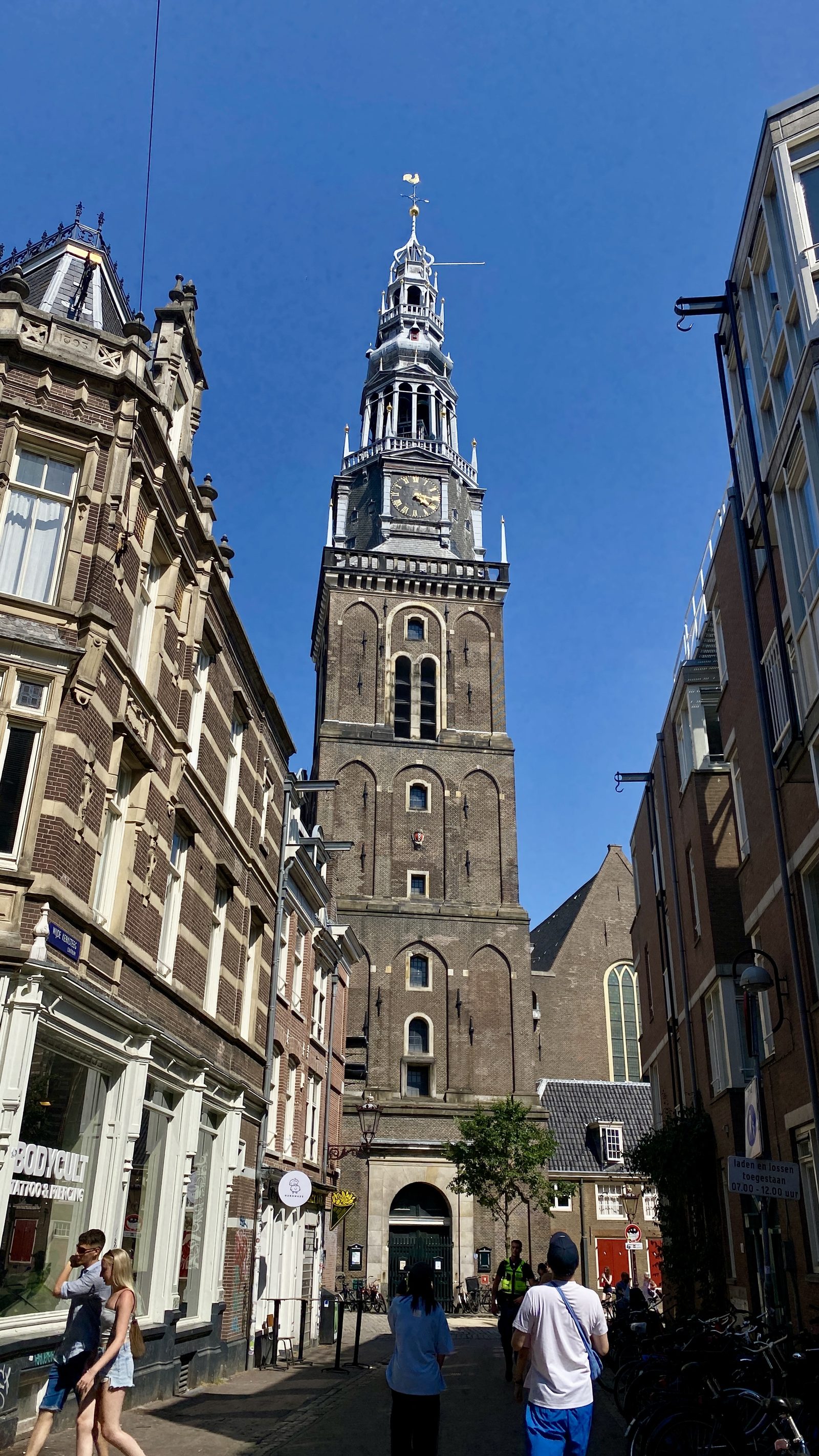
Cycling remains a quintessential experience, and green spaces like Vondelpark and Amsterdamse Bos provide calm retreats. Whether sampling Dutch treats like stroopwafels, poffertjes, and local cheeses, enjoying craft beers, wine, or a relaxed visit to a coffeeshop at a canal-side terrace, or simply wandering historic streets, Amsterdam combines heritage, creativity, scenic landscapes, and lively urban charm in a uniquely welcoming setting.
As much as we would have loved to continue exploring Amsterdam, Martin and Ivy were set to leave for Stuttgart on July 2, while David planned to take Anna to Heeg Hafen before heading to Luxembourg. Before our break, David organized a brief farewell dinner at Fa Pekelhaaring, a charming Italian restaurant tucked away along a lively canal. The food was exquisite — rich flavors and beautifully presented dishes — and the service was warm and impeccable. Sitting there in the softly lit, cozy atmosphere, we felt a perfect blend of Amsterdam’s cosmopolitan energy and intimate charm. It was a fitting send-off, leaving us with lasting memories of what a vibrant city can offer.
As we wrapped up our dinner, laughter and conversation lingered over the last sips of wine. We even managed to make the waiter laugh when we ordered a sgroppino (citroensorbet, vodka, prosecco) with three straws. Shared adventure – shared dessert. “Oh well, see you in three weeks!” we said, knowing that our brief break would soon be followed by another adventure. It was a pleasant end to our time in Amsterdam, leaving us with warm memories of the city’s charm, lively energy, and the joy of shared experiences.
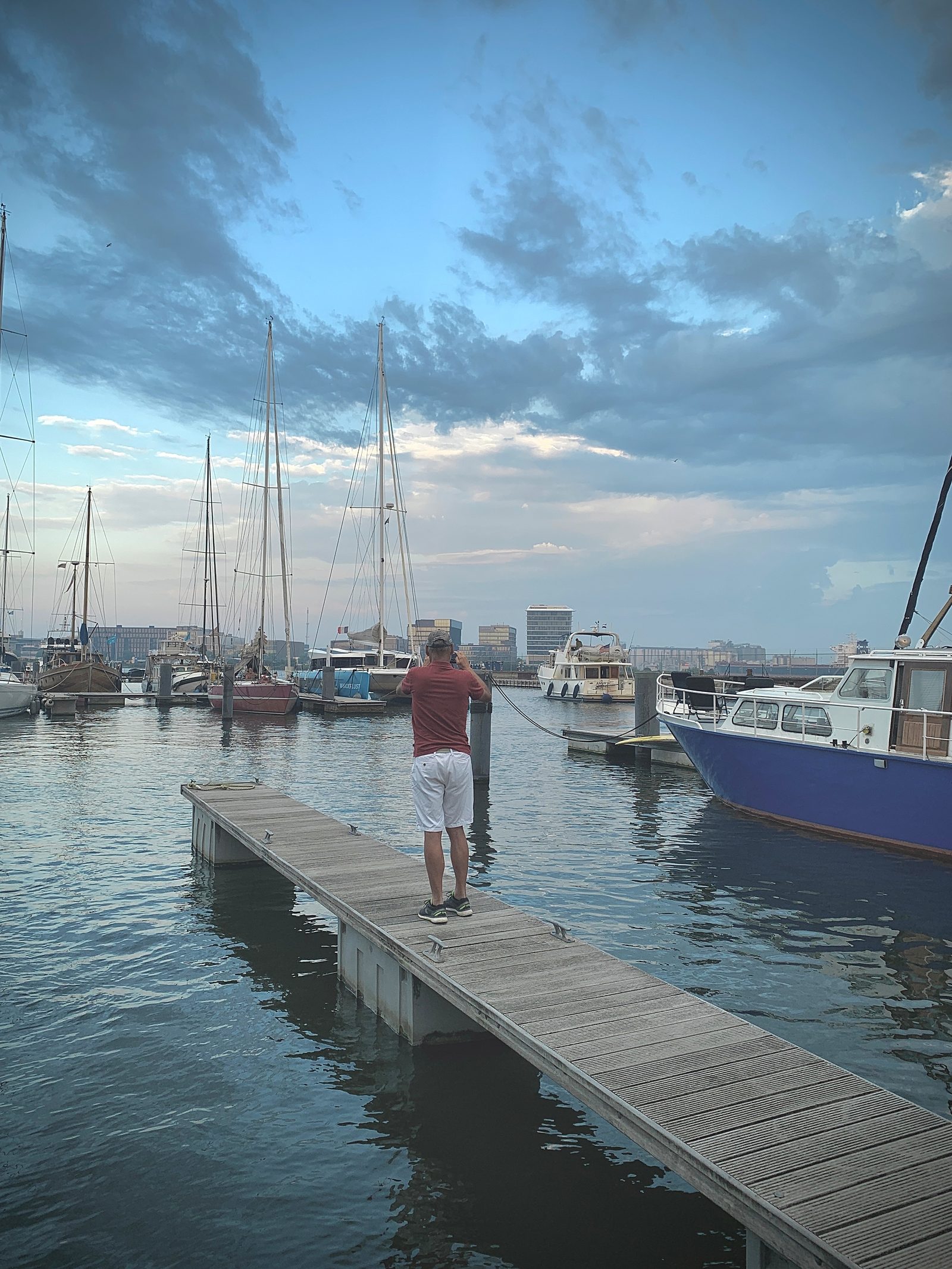
… “Bye for now — we stood on the dock watching Anna slip away toward Heeg Hafen.”
Comments
From the old site. Comments are closed; write to us through the contact page.
Wolf Fettig, 12 September 2025
Beautiful report of your adventures